
What Is LPG?
Liquefied Petroleum Gas (LPG) is a fuel gas mixture primarily composed of propane and butane. Under moderate pressure or low temperatures, LPG becomes a liquid, allowing it to be stored in cylinders or pressurized vessels at ambient temperatures.
In many regions, LPG is widely used for cooking, heating, and small industrial applications. Its infrastructure is comparatively simple, consisting of cylinders, pressure tanks, and compact distribution systems.
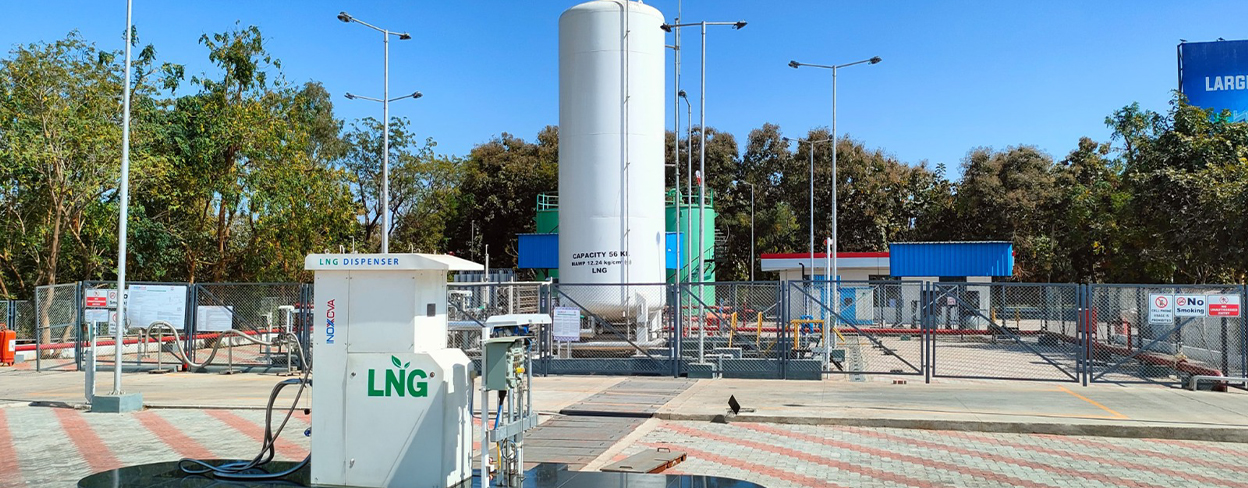
What Is LNG?
Liquefied Natural Gas (LNG) is primarily methane (CH₄), treated and cooled to about -162°C under atmospheric pressure to convert it into a liquid. In its liquid state, LNG occupies roughly 1/600th the volume of natural gas in gaseous form, making it economical for transport and storage over long distances.
Unlike LPG, LNG must be stored in cryogenic tanks and requires specialized handling to maintain ultra-low temperatures and prevent vaporization (boil-off).
Key Differences: LPG vs LNG
Let’s compare them across critical parameters:
| Parameter | LPG | LNG |
|---|---|---|
| Composition | Propane, butane | Methane (CH₄) |
| Liquefaction | Moderate pressure or cooling | Deep cooling to -162°C |
| Storage | Pressurised tanks, cylinders | Cryogenic tanks or insulated carriers |
| Usage | Cooking, heating, small industries | Power, industry, long-haul transport |
| Regasification | Not needed | Required before use |
Technical Nuances Worth Knowing
- Boil-Off Handling: LNG systems manage vaporization due to heat ingress through compressors and reconversion systems.
- Regasification: Liquefied Natural Gas requires specialized vaporizers before pipeline delivery.
- Safety Considerations: LPG under pressure poses overpressure risks; LNG’s extreme cold can cause cryogenic burns or material failure.
- Suitability: LPG is used where the infrastructure is basic. LNG is ideal for long-distance or high-volume usage.
Infrastructure and Cost Implications
From an engineering perspective, the difference in infrastructure is vast:
- LPG systems are more cost-effective to deploy, utilizing simple steel cylinders or pressurized tanks. The liquefaction process does not require deep cooling or cryogenics.
- LNG systems, in contrast, involve expensive cryogenic tanks, insulated pipelines, and regasification units. Although more expensive, they enable large-scale fuel transportation and grid integration, especially where pipelines fall short.
Real-World Applications
- LPG is popular in rural areas, the hospitality industry, small industries, and as an automotive fuel.
- LNG fuels heavy industry, shipping, power plants, mobility, and cross-border distribution networks.
Safety and Regulatory Differences
While both gases are flammable, their hazards differ:
- LPG, being denser than air, can accumulate in low spaces and cause explosions if ignited.
- LNG vapors rise and dissipate more easily but require precautions against cryogenic burns.
Both require gas leak detection, emergency shutdown systems, and compliance with safety codes. At INOXCVA, our cryogenic designs adhere to global safety standards, making safety a default, not an afterthought.