
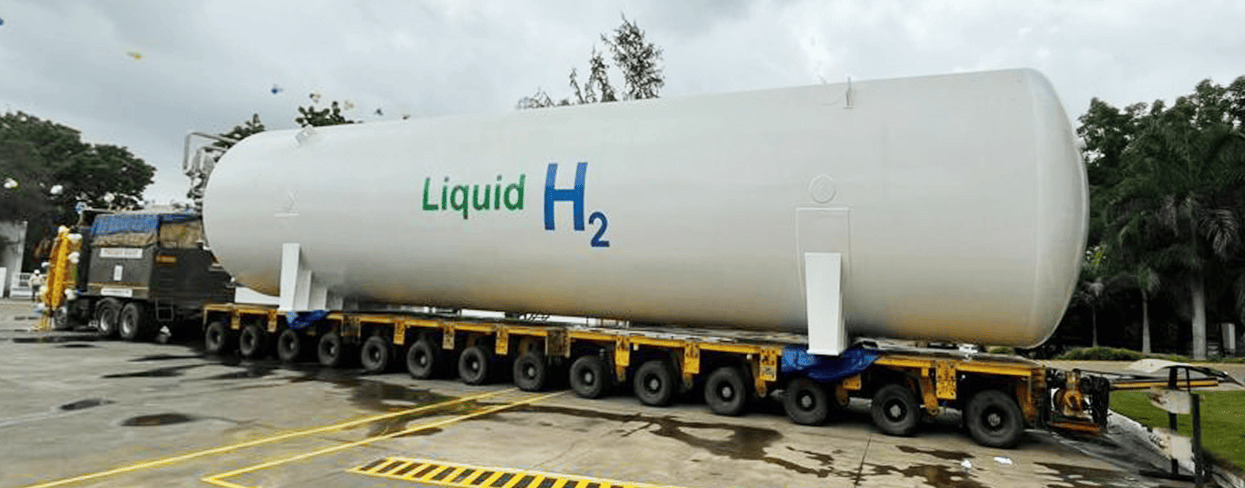
To create a sustainable energy future, globally, requires more than the installation of renewable energy sources. The efficient transport and storage of these renewable energy sources is also critical to establishing a sustainable future. Hydrogen has emerged as one of the leading zero-carbon fuel alternatives, especially for some of the most challenging industries such as aviation, heavy transportation, and long-duration energy storage. The issue with hydrogen is that it is a very light gas, making the ability to transport and use hydrogen on a large scale less likely to occur unless it is reduced in size, or more specifically, cooled to extremely low temperatures.
By using advanced cryogenic solutions, we have the opportunity to develop viable hydrogen-based energy infrastructure at the necessary scale to meet the planet’s energy needs.
The Density Dilemma: Why We Go Cryogenic
Hydrogen gas in its natural form takes up enormous space. Storing it as a compressed gas demands pressures touching 700 bars, which makes the equipment heavy, complex, and energy hungry for any large-scale movement. Everything changes once hydrogen is converted into its liquid state.
Liquid Hydrogen is produced by cooling the gas to −253°C (20 K). At this point, hydrogen becomes a dense, easily handled liquid. The shift in volume is huge because one litre of liquid hydrogen occupies roughly 1/800th the volume of hydrogen gas at standard conditions, resulting in an energy density increase of approximately 250 times
This density drives real-world feasibility for a hydrogen-focused future. It gives ships, trucks, and trains the ability to carry meaningful fuel quantities for long routes, and it helps storage hubs manage industrial volumes without requiring massive space. Beyond transport, this compact form supports smoother refuelling operations, better thermal stability, and improved energy planning for industries preparing to scale up their hydrogen footprint.
The Role of Cryogenic Storage Tank Technology
The cryogenic storage tank serves as the most prominent element of the cryotech infrastructure because it is a highly specialized, dual-walled pressure vessel designed to store Liquid Hydrogen (LH2) at very low temperatures. Industrial cryogenic storage tanks can be thought of as giant thermos bottles; they have a specialized stainless steel inner shell and an outer shell that has an extremely high vacuum in the annulus, or space between the two walls of the tank. This high vacuum, in conjunction with multi-layered insulation (MLI), serves to reduce the heat transfer from outside of the tank to the LH2 to near zero. When even a small amount of heat from the surrounding atmosphere makes its way to the LH2, the liquid quickly turns into vapour (flashes off) and results in a waste of product. Manufacturers such as INOXCVA build tanks that are mission-critical in their design to ensure they meet all the safety requirements, structural integrity, and thermal-efficiency requirements. The absence of a reliable cryogenic storage tank prevents large-scale hydrogen transportation from occurring due to economic inadequacies. Liquefaction plants, import terminals, and heavy-duty refuelling facilities all rely on the flawless design integrity of these tanks.
Enabling the Full Hydrogen Supply Chain
The application of cryogenic solutions touches every step of the hydrogen value chain, turning a difficult gas into a viable fuel:
1. Liquefaction and Production Hubs
At the production level, custom-engineered cryogenic heat exchangers and cold boxes are necessary to bring the hydrogen temperature down to 20 K. These facilities are enormous and rely entirely on complex cryogenic processes to operate efficiently.
2. Transport and Logistics
For true global scaling, LH2 must travel. INOXCVA supplies ISO tank containers and road tankers designed to keep LH2 stable during multi-day transit across oceans and continents. This mobility is essential for creating truly global hydrogen energy infrastructure.
3. Refuelling Infrastructure
The local hydrogen economy depends on reliable refuelling stations. These stations utilize highly specialized cryogenic pumps and valve boxes to safely dispense LH2, often warming it back up to gaseous form before pumping it into the vehicle’s fuel tank. Precision engineering prevents dangerous leaks and ensures rapid, efficient fueling times necessary to compete with diesel and gasoline stations.
From Pilot Projects to Global Infrastructure
As governments and industries commit to decarbonization, the demand for reliable cryogenic solutions is surging. Hydrogen is no longer a concept; it’s an active commodity.
The growth of sectors like hydrogen-powered shipping and long-haul trucking requires a massive, resilient investment in fixed infrastructure. The entire new energy infrastructure relies on standardized, safe, and efficient cryogenic technology. This means greater demand for everything from small mobile refuelling tanks to multi-thousand cubic meter bulk cryogenic storage tank facilities.
The challenge is real: dealing with a material colder than anything else handled commercially requires specialized knowledge and manufacturing rigour. But the benefit – unlocking a zero-emission, high-energy fuel for the world – makes the investment in this advanced cryogenic technology completely essential. This commitment to precision engineering not only ensures safety and prevents product loss but also guarantees the economic viability of the entire supply chain. As the hydrogen economy moves from demonstration projects to global commercial deployment, the quality and reliability of cryogenic equipment become the most critical determinants of success. It is the cold, hard reality that powers the future, and only companies dedicated to cryogenic excellence can deliver on that promise.
Ready to build the future of hydrogen? Trust INOXCVA. Connect with our specialists today to advance your hydrogen infrastructure and secure your supply with world-class cryogenic storage tanks.