
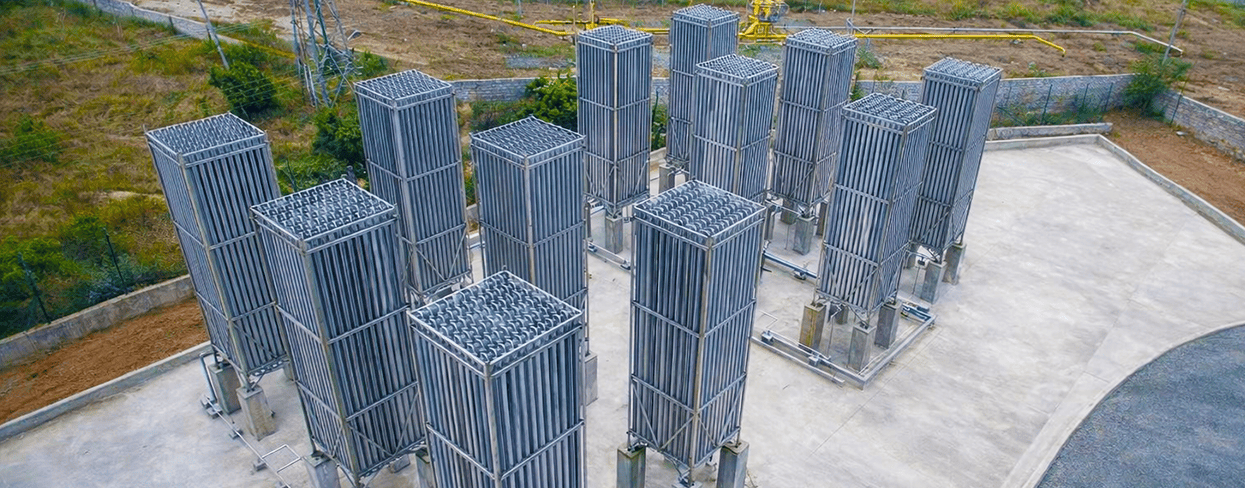
In modern industrial gas handling systems, vaporisers are essential components helping safely, effectively, and consistently transform cryogenic liquids into usable gaseous form. Choosing the appropriate vaporiser is crucial for maintaining operational continuity, safety, and cost effectiveness in a variety of applications, including high-volume manufacturing, healthcare oxygen supply, and energy applications.
By using the vaporised stream as the heat exchange fluid, vaporiser machines are most frequently utilised for low-pressure heat transfer. They can also be used to evaporate cryogenic liquids or liquid fuels.
This article presents you with insight into selecting the right vaporisers, types, features, and applications. Also, why INOXCVA is the leading company dealing with vaporisers.
Understanding the Importance of Vaporisers
Gases, including oxygen, nitrogen, and hydrogen, are kept in liquid form at very low temperatures in cryogenic systems. In order to transform these liquids into gas at the necessary flow rates and pressures, vaporisers allow controlled heat transfer from an external source. Particularly in high-pressure and “extreme science” settings, the right vaporiser choice has a direct impact on system efficiency, energy consumption, and safety compliance.
Understanding the Types of Vaporisers under Heat Source
There are two ways vaporiser types are found: to generate a vapour or to transfer the heat. One of the common types is under the heat source. Each type of vaporiser is designed to meet operational demands. Better temperature homogeneity and less pressure heat exchange are made possible by using vapours over liquids or solid surfaces. The vaporised fluid may be incorporated either inside or outside the tubes in these machines, which usually have a shell and tube heat exchanger.
Different ways vaporisers can be distinguished based on the heat source.
Ambient Air Vaporizers
Natural convection from the surrounding air serves as the heat source for ambient air vaporisers. Heat from the atmosphere is absorbed by cryogenic liquid as it passes through finned aluminium or stainless-steel heat exchanger tubes, where it transforms into gas.
Benefits
- Absence of external energy use
- Minimal maintenance and running expenses.
- Very dependable with few moving parts
Applications: It is best suited for medium-flow industrial applications, gas distribution networks, and healthcare facilities.
INOXCVA deals with Ambient Air Vaporisers that are installed across hospitals, manufacturing units, and gas, having durability and great performance.
Steam Heated Water Bath Vaporisers
Steam heated water bath vaporiser keeps the water bath hot. Rapid and reliable vaporisation is made possible by the passage of cryogenic liquid through coils submerged in the bath.
Benefits
- High capacity for vaporisation
- Constant gas production
- Ideal for high-load, continuous operations
Applications: Ideal for energy facilities with constant gas demand, steel production, refineries, and huge industrial units.
Shell & Tube Vaporisers
In shell and tube vaporisers, cryogenic liquid travels via internal tubes while an external heating medium, such as steam or hot water, flows through the shell.
Benefits
- Great thermal efficiency
- Small size for large capacity requirements
- Dependable operation of vital procedures
Applications: Widely used in large-scale industrial gas systems, petrochemical facilities, LNG regasification, and chemical processing.
Choosing the Right Vaporiser for a better outcome
There are three different aspects to consider when it comes to selecting vaporisers. It is important to consider the operational outcomes. These are-
- Low operating costs and energy efficiency: Ambient air vaporisers
- High flow rates and continuous supply: Steam-heated water bath vaporisers
- Shell & Tube Vaporisers: small, highly accurate vaporisers
By optimising each vaporiser type for its intended use, INOXCVA’s engineering methodology minimises the total cost of ownership while increasing uptime.
Integrated Infrastructure for Cryogenics
INOXCVA provides fully integrated solutions, going beyond isolated equipment. Among these are Vacuum Jacketed (VJ) Piping and Pressure Regulating Skids, which are made to integrate easily with vaporisers to provide accurate pressure control and no heat loss.
- VJ Piping: Guarantees low heat intrusion and effective cryogenic liquid transmission.
- Pressure Regulating Skids: For delicate applications, keep the downstream pressure steady.
Since these systems are custom-engineered rather than off-the-shelf, they precisely match the flow rates, pressures, site layouts, and environmental conditions of each individual customer.
Considering Compliance and Safety
Every vaporiser used for industrial purposes should meet the regulations of the American Society of Mechanical Engineers. These guidelines are intended to guarantee that equipment is made to operate effectively and safely.
Keeping this aspect as the priority, INOXCVA’s industrial vaporisers are created using ASME and PESO guidelines, two strict international standards. In high-pressure and harsh operating settings, when failure is not an option, this guarantees safety, dependability, and long-term performance.
Conclusion
When it comes to choosing an industrial vaporiser, understanding the different types and their applications is key. INOXCVA brings decades of experience in designing reliable, efficient, and high-performance cryogenic solutions for various vaporisation needs. Whether your requirement involves high-capacity operations, continuous gas supply, or energy-efficient processes, you can trust INOXCVA to deliver the right equipment. Connect with our team today to explore vaporisers that meet your operational needs.